
Water Supply Design · Municipal water utility
Municipal Water Network Capacity Upgrade
Hydraulic re-modeling and phased redesign of an aging distribution network to resolve chronic low-pressure complaints in outlying districts.
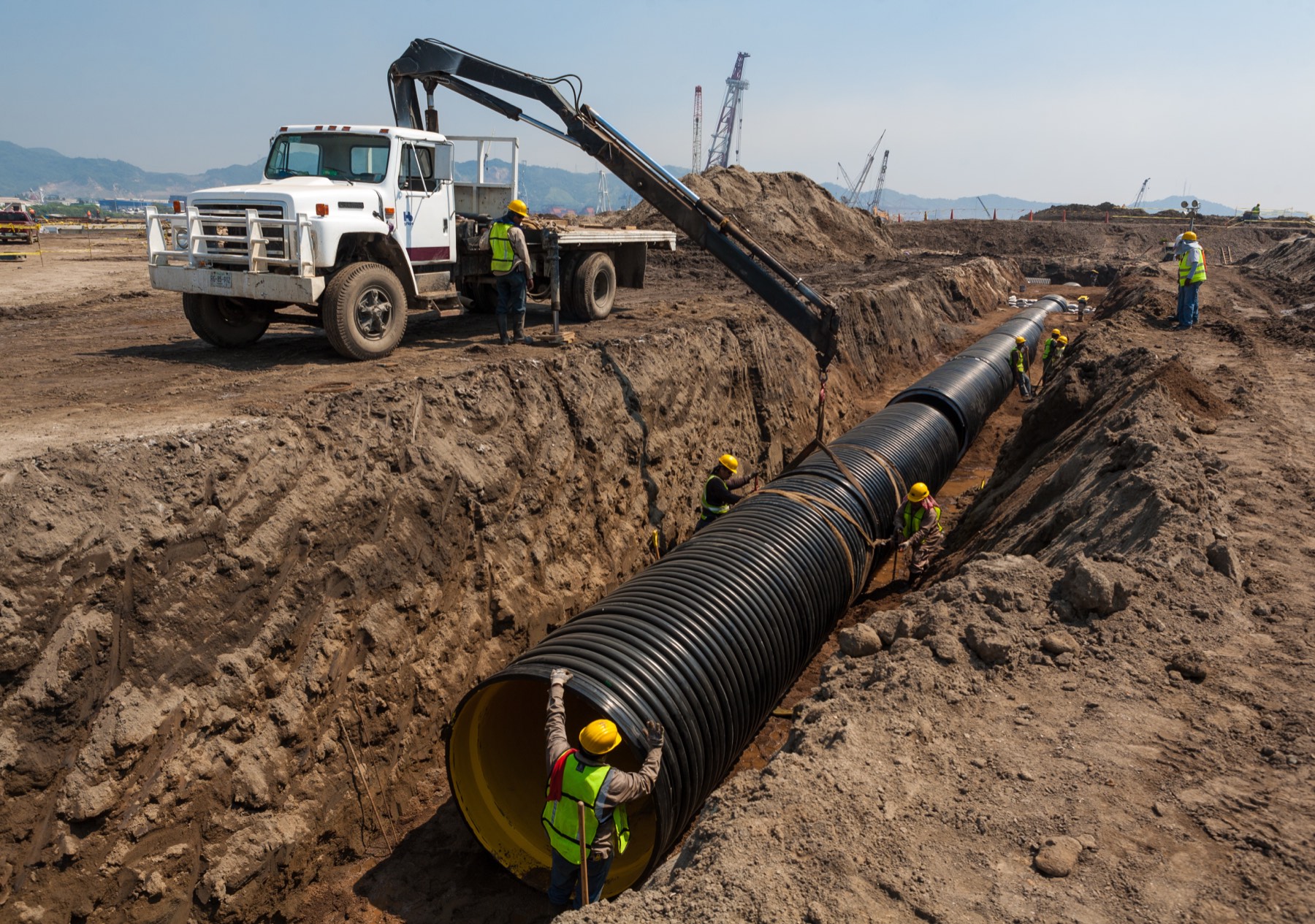
Photo: Tomas Castelazo, www.tomascastelazo.com, CC BY-SA 3.0, via Wikimedia Commons
The challenge
A municipal water utility was receiving persistent low-pressure complaints from an outlying district connected to a network originally sized decades earlier for a much smaller population. Before committing budget to new pipework, the utility needed to know exactly where the network was undersized and whether the existing pumping station could support a fix.
Our approach
- •Rebuilt the network hydraulic model from utility GIS records and site-verified pipe data, correcting several inaccuracies in the legacy model.
- •Ran peak-demand and fire-flow scenarios to identify the specific pipe sections and pressure zones causing the shortfall.
- •Sized targeted pipe replacements and a pressure-zone boundary change rather than a full network rebuild, keeping the intervention proportional to the problem.
- •Verified the existing pumping station duty point against the revised network curve before recommending any pump changes.
Outcome
- •Identified that roughly 40% of the perceived network problem was resolvable through a pressure-zone boundary adjustment alone, at a fraction of the cost of full pipe replacement.
- •Delivered a phased construction package (2D drawings, calculation report, pipe schedules) that let the utility fund the work over two budget cycles instead of one large capital request.
- •Existing pumping station was confirmed adequate, avoiding an unnecessary pump replacement.
SoftwareAutoCADHydraulic network modeling
Have a similar project?
Tell us the scope and stage of your project and we will come back with next steps.